

The D.Min.
The Doctor of Ministry
in Theology for the Church
Tennent’s Doctor of Ministry in Theology for the Church program is the natural overflow of our Master’s degrees. The same distinctives (retreat, cohort, family, and mission) undergird everything we do.
Students in our D.Min. program will join us according to a regular rhythm of retreat and return: retreating with us to a quiet place in the mountains and returning to their place of ministry to continue the process of reflection and research. As always, families are welcome to join in the camaraderie.
Academically, this 37-hour degree is intended to qualify the student as an ecclesial theologian, a theologian who serves the church. It is designed to be both rigorous and thoughtful, allowing students to explore deeply an area of theological inquiry with relevance to the student’s life and ministry.
Students will participate in seminars led by exemplary scholars in theological studies, biblical studies, church history, and applied theology. Finally, students will write a doctoral dissertation that meets a thorough and complete research standard and also makes a true contribution to the field.

Who?
The D.Min. is for leaders with substantial ministry experience and a previously earned Master’s degree in a theological discipline. It is for students who are intellectually curious, lifelong learners, particularly those who are missionally minded and feel called into shepherd leadership. It’s not intended for scholars whose focus is the academy but rather for those whose first desire is to serve the church as a rigorous theologian and shepherd.
The same admission requirements as delineated for our Master’s candidates apply. Applicants must submit strong academic, ministry, and personal references, a personal testimony, writing samples, and—unique to this degree—an initial research proposal.
Why?
Our D.Min. differs from a Ph.D. in theology in the same way that an M.D. is distinct from a Ph.D. in medicine: it is a practitioner’s degree, not simply an academic exercise. However, excellent service in whatever context demands our best thought and skill. This program will equip students with more robust biblical and theological foundations to continue in service for a lifetime.
The D.Min. is intended to stretch ministry leaders to greater excellence through reflection, collaboration, and research—identifying problems or gaps in our theological understanding and seeking to bring greater clarity and understanding to the real-life challenges of ministry. At Tennent, we have designed this study to occur in the context of a cohort—a dedicated group of likeminded men and women, all committed to loving God with all of their heart, soul, mind, and strength.

How?
Like all of our programs, the D.Min. at Tennent entails thought and reflection at home combined with embodied residencies and personal instruction. It is unique among our degrees in its design as a rolling cohort; students may join in at any time, progressing with the group, without missing a beat.
Residencies will take place twice a year (fall and spring) for one to two weeks each time (details below). Since D.Min. residencies overlap with our Master’s residencies in the same location, students are welcome to sit in on any Master’s level classes that they wish while on site.
Students begin thinking about their thesis from day one. Accepted students will be paired with an initial advisor upon acceptance, and ultimately a first reader who will walk with them throughout the program.
Nuts & Bolts
Tuition, Room and Board
Tuition for the D.Min. degree is $300 per credit hour. (It is a 37-hour degree.) Additionally, students will pay $750 per week on site for room and board. As for all of our students, this fee covers not only the student, but spouses and children as well. While your immediate family is not required to attend, they are always welcome, and will find a fun and restful retreat environment in the company of many new friends.
Program Sequence
Term 1
Introduction and Ethics for Doctoral Studies ( DM 800, 1 hr, reading course)
Two-Week Residency
Topics in Systematic and Biblical Theology ( DS 825, 3 hrs)
Theological Research and Reading (DM 825, 3 hrs)
Term 2
Two-Week Residency
Topics in Exegesis and Biblical Studies (DS 850, 3 hrs)
Theological Writing and Proposal (DM 850, 3 hrs)
Term 3
Two-Week Residency
Colloquium: sharing research, writing, defense preparation
Topics in Church History and Historical Theology (DS 875, 3 hrs)
Thesis Proposal (DR 875, 3 hrs)
Term 4
Two-Week Residency
Colloquium: sharing research, writing, defense preparation
Topics in Missiology and Applied Theology (DS 900, 3 hrs)
Thesis Research (DR 900, 3 hrs)
Term 5
One-Week Residency
Colloquium: sharing research, writing, defense preparation
Thesis Writing I (DW 925, 6 hrs)
Students may elect to stretch the one-week residency into a two-week stay if desired.
Students may elect to sit in on any Master’s course(s) or enroll in/audit a doctoral seminar.
Term 6
One-Week Residency
Colloquium: sharing research, writing, defense preparation
Thesis Writing II (DW 950, 6 hrs)
Students may elect to stretch the one-week residency into a two-week stay if desired.
Students may elect to sit in on any Master’s course(s) or enroll in/audit a doctoral seminar.
Why the residency?
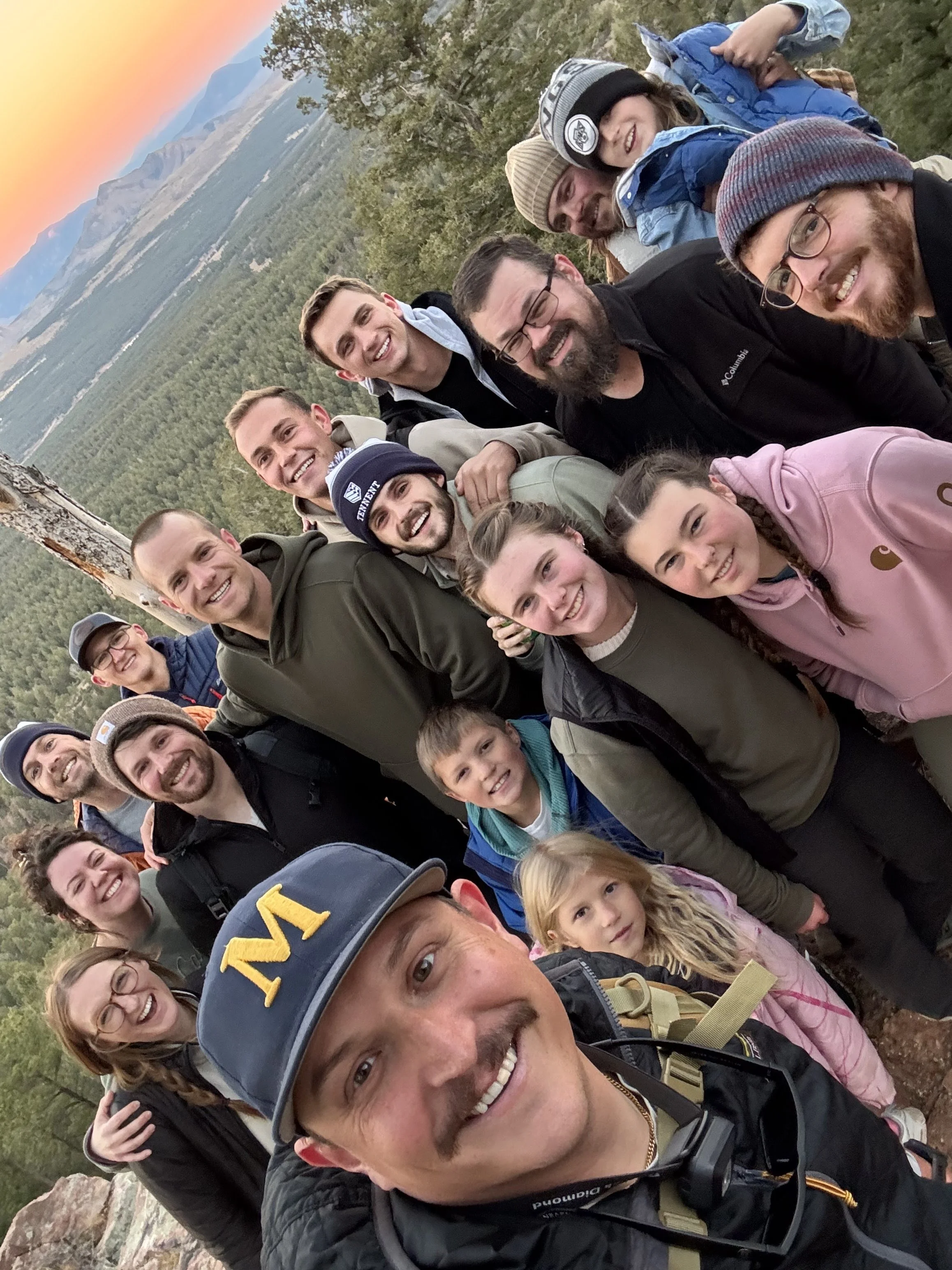
Many schools try hard to make distance learning the norm, for the understandable rationale that ministry leaders are busy and need greater flexibility. Flexibility, yes, but at Tennent, we are committed to incarnational study. The D.Min. is no exception.
The cohort/retreat model is at the heart of what makes Tennent special. Friendship, dialogue, accountability, and family interaction are key. Therefore, the residency itself is the greatest gift at Tennent. It’s like the difference between skim milk and whole milk, instant coffee and cappuccino. An online class is fine here and there, but life-on-life discipleship is sweet, rich, and deep. This is the Tennent difference, and we are unapologetically leaning in.
The Initial Thesis Proposal
As a crucial part of the application process to Tennent’s D.Min. program, potential students need to give thought to the thesis project which will be the backbone of their degree. This means, at a minimum, that students have identified an area of inquiry, come up with a preliminary thesis statement to drive their research, and put together an initial list of sources that will serve as conversation partners to kick things off. Please download the Tennent D.Min. Initial Proposal Instructions document and read it carefully. You will be asked to upload your proposal in the application. Feel free to reach out via email (admin@williamtennent.org) if you have any questions.